
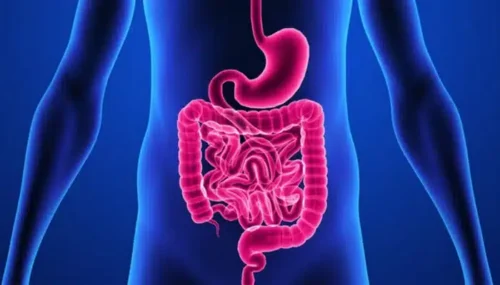
The Inside Passage
Twenty-Six Feet. Every Stop Matters. What Moves Through You Either Builds You or Breaks You.
Station 1 — The Oral Cavity — Where the Journey Begins
- Digestion does not start in the stomach — it starts here
- Chewing is the first act of medicine — skip it and every station downstream suffers
- Salivary amylase is already breaking down carbs before you swallow
- The oral microbiome is your body’s first security checkpoint
- Neglect this station and the damage travels — to the heart, the brain, and beyond
Station 2 — The Esophagus — The Corridor
- A ten-second transit — but the door at the bottom must close tight
- A leaking lower esophageal sphincter is not a heartburn problem — it is a lifestyle problem
- Acid coming up is not too much acid — it is acid in the wrong place
- This corridor was built for one-way traffic — keep it that way
Station 3 — The Stomach — The Acid Chamber
- pH of 1 to 3 — as acidic as battery acid — and that is exactly what you need
- Low stomach acid is epidemic — and most people are making it worse with antacids
- pylori lives silently in half the world’s population — most have no idea
- The stomach does not just digest food — it sterilizes it
- Suppress the acid long enough and protein digestion collapses system-wide
Station 4 — The Small Intestine — The Great Absorber
- Twenty-two feet — the most important real estate in your body
- Surface area of a tennis court when healthy — a postage stamp when damaged
- This is where your supplements either work or get wasted
- Leaky gut begins here — and from here it goes everywhere
- A compromised lining is not a gut problem — it is a whole-body problem
Station 5 — Liver & Gallbladder — The Processing Plant
- No bile — no fat digestion — no fat-soluble vitamins
- Everything absorbed from the gut goes through the liver first — it is the body’s filter
- A sluggish gallbladder is quiet until it is not — then it gets loud fast
- Bitter foods are the ancestral signal that gets bile moving — we stopped eating them
Station 6 — The Pancreas — The Enzyme Factory
- Without pancreatic enzymes, food passes through instead of feeding you
- Enzyme output declines with age — almost nobody addresses this
- The pancreas also runs blood sugar — two jobs, both critical, both neglected
- Processed food and chronic stress are the two fastest ways to wear this organ down
Station 7 — The Large Intestine — The Microbiome Metropolis
- Thirty-eight trillion residents — outnumber your own cells
- They make vitamins, regulate immunity, and wire directly into your brain
- Feed them fiber or feed the pathogens — there is no neutral choice
- A depleted microbiome does not just affect digestion — it affects your mood, your focus, your resilience
- This is where the Caveman diet pays its biggest dividend
Station 8 — The Exit Ramp — The Final Report Card
- What comes out is a direct readout of what went on above
- Type 4 on the Bristol Stool Scale is the target — smooth, complete, effortless
- Straining is not normal — it is a signal
- Transit time of 18 to 24 hours means the system is running on schedule
- If the exit ramp is struggling, do not treat the exit — investigate the route.
—————————————————————————————————-
The Bristol Stool Scale
The Bristol Stool Scale is a clinical chart developed at the University of Bristol in 1997. It categorizes human stool into seven types based on shape and consistency — giving both patients and clinicians a simple, standardized way to describe bowel health without guesswork.
The seven types:
Type 1 — Separate hard lumps, like small stones. – Severe constipation.
Type 2 — Lumpy, sausage-shaped but hard. – Mild constipation.
Type 3 — Sausage-shaped with cracks on the surface. – Normal, borderline.
Type 4 — Smooth, soft, sausage or snake shape. – The target. Ideal.
Type 5 — Soft blobs with clear-cut edges. – Lacking fiber, moving too fast.
Type 6 — Fluffy, mushy pieces with ragged edges. – Mild diarrhea.
Type 7 — Entirely liquid, no solid pieces. – Severe diarrhea.
The clinical takeaway:
Types 1 and 2 — transit is too slow. Waste is sitting, water is being reabsorbed, and bacterial toxins are recycling back through the colon wall.
Types 6 and 7 — transit is too fast. Nutrients and water are being lost before absorption is complete.
Type 4 is the target every time. Consistent Type 4 means the route is running on schedule.