
Commentary by Dr. David C. Kolbaba
There’s a troubling trend quietly spreading through conventional medicine — and most patients have no idea it’s happening.
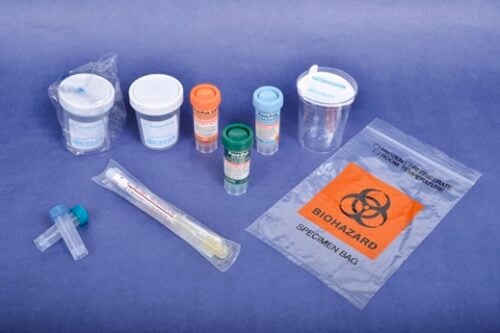
A growing number of physicians, labs, and clinical testing facilities are no longer requiring the fastidious specimen collection protocols that once defined good medicine. Little-to-no fasting instructions. No specific timing requirements for urine collection. No meticulous preparation guidelines for stool samples or saliva specimens.
Just show up and hope for the best.
When laboratories abandon these precision standards, they’re not just cutting corners — they’re sabotaging the very accuracy they claim to provide.
Every variable they ignore creates noise . . . in the data.
Many patients getting blood work done two, three, four times a year assume their doctor is painting a full picture of their health.
What they don’t realize is that in a great many of those cases . . . the test isn’t about their health at all . . . it’s about their medications.
The problem starts with abbreviated lab panels designed more to protect prescriptions than illuminate patients.
When your doctor orders a “comprehensive” metabolic panel, what you’re actually getting is a toxicity scan — a narrow snapshot looking only for values sick enough to justify pharmaceutical intervention or dose adjustment.
The physician is watching for toxicity. Making sure the medication isn’t damaging the liver, the kidneys, the blood counts. Most likely, the main motivation for these abbreviated panels is to protect the prescription —
The reference ranges are set so wide that you can be symptomatic, declining, and struggling for months or even years before anything shows up as officially “abnormal.”
Then, when something does show up, the response is almost predictable.
“We’re going to watch it. Keep an eye on it”
Come back in three/six months . . . in a system that is overbooked and oriented toward crisis intervention . . . patients are left to percolate. . .floating down-Stream
The threshold for action keeps moving, and while the doctor is watching, the patient is worsening — slowly, quietly. The patient’s confidence continues . . . assuming that someone has their back.
At our Quest for Health Clinic, we do things differently. We’re meticulous about specimen collection, fasting protocols, and the kind of thorough preparation that gives us a real picture of what’s happening inside your body.
Because if you’re going to run the test, run it right. And if something shows up — Let’s do something about it.